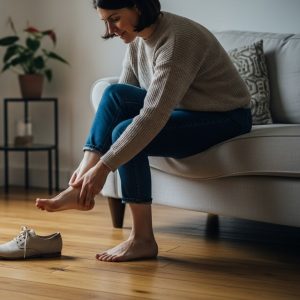

The cruellest part of plantar fasciitis is usually the same: the first few steps out of bed in the morning. That sharp, bruised pain under the heel hits before you have even reached the bathroom, eases as you move about, then creeps back after you have been sat at a desk all day. If that sounds like your feet, you are not imagining it, and you are not alone in wanting something soft to stand on rather than another rigid plastic shell.
Search for the best insoles for plantar fasciitis and almost every guide answers the same way: firm arch support and a deep heel cup, with a strong hint that the insole will somehow fix your foot. On forums the lived experience is messier. People say what helped one person did nothing for another, that rigid orthotics often feel too hard for all-day wear, and that what they really wanted was honest, all-day cushioning.
This guide takes the honest route. It explains why that morning heel pain happens, separates soft cushioning for comfort from firm orthotics for support, attributes the self-care to the NHS rather than to any product, and signposts when to see a GP or podiatrist instead of buying anything at all.
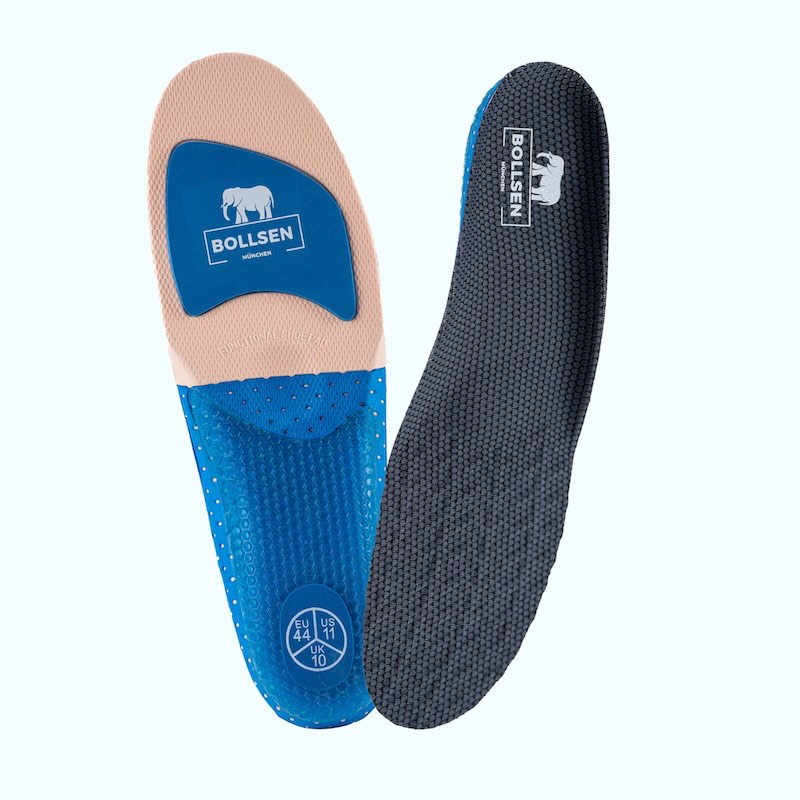
BOLLSEN Insoles
★ Our Top Pick: Best for soft, all-day heel cushioning
BOLLSEN is a comfort brand trusted by more than 1,000,000 people, best known for everyday-wear comfort products and a 40-day money-back guarantee. Its insoles are soft, full-length cushions built around Porr-Pad technology and a PORON ShockPad foam layer that absorbs impact under the heel on hard floors, with a flexible Nylon Pebax midfoot shank that adds a little underfoot structure rather than forcing the foot into a rigid orthotic shape. They are not a medical device and they do not claim to treat plantar fasciitis or change your foot. What they offer is soft, shock-absorbing cushioning that may make standing and those first steps feel a little easier underfoot. They come in UK sizes 4 to 12.5, can be trimmed to fine-tune the fit, and cost £49.95 a pair.
- Soft, full-length Porr-Pad cushioning that spreads pressure across the whole footbed
- PORON ShockPad foam layer absorbs heel impact on hard and concrete floors
- Flexible Nylon Pebax shank adds light underfoot structure without a rigid arch
- Sized UK 4 to 12.5, then trimmable to fine-tune the fit in shoes and work boots
- 40-day money-back guarantee, so you can test comfort risk-free
- Soft cushioning, not a rigid orthotic, so anyone advised to control foot motion may prefer a moulded support
- At £49.95 a pair they cost more than basic foam insoles
- Soft foam compresses over time and needs replacing every 6 to 12 months
Why does your heel hurt most with the first steps out of bed?
Plantar fasciitis pain tends to be at its worst just after rest, then eases as the foot gets moving and returns once you stop, which is exactly how Versus Arthritis describes plantar fasciitis pain. That is the pattern behind the dreaded morning first step. Overnight the band of tissue under your foot, the plantar fascia, sits relaxed and slightly shortened, and the first time you load it in the morning it stretches abruptly.
The NHS describes plantar fasciitis simply as pain on the bottom of your foot, around your heel and arch. The same “kills when I stand up” feeling shows up after a long sit at a desk, not only first thing. Soft cushioning will not undo any of that mechanism, but a shock-absorbing footbed can make those first steps feel a little softer underfoot, which is comfort, not a cure.
Can insoles cure plantar fasciitis?
No insole cures plantar fasciitis, and any product that promises to is overstating things. An insole does not change the shape of your foot or repair the fascia. What a soft, cushioned insole can do is ease everyday pressure and add comfort underfoot, which is a genuinely useful thing when you are on your feet all day, just not the same thing as treating the condition.
This is also where honesty beats hype. The forum consensus is that results vary hugely from person to person, and that comfort usually comes from combining sensible footwear, the self-care the NHS suggests, and rest, rather than from one magic insole. Cushioning is one piece of staying comfortable, not a fix for the underlying problem.
Soft cushioning or a firm orthotic: which do you actually need for heel pain?
For all-day comfort, a soft, full-contact cushioning insole that absorbs shock under the heel suits many people who simply want their feet to ache less, while a firm, rigid orthotic is built for motion control and is often recommended for a specific diagnosed need. Neither reshapes your foot. The honest question is which feel actually helps you get through the day.
Rigid-orthotic brands such as Superfeet, Powerstep and Vionic build deep heel cups and semi-rigid arch support, and that structure genuinely suits people advised to manage motion control. Plenty of people with heel pain, though, find firm orthotics too hard for all-day standing and prefer cushioning underfoot. If a clinician has told you to control how your foot moves, follow that advice. If you mostly want soft, shock-absorbing comfort on hard floors, cushioning is the more comfortable answer.
| What you are choosing | Soft cushioning insoles (e.g. BOLLSEN) | Firm orthotic insoles |
|---|---|---|
| Best suited to | Everyday comfort, all-day standing, hard floors | Motion control, clinically advised support |
| Feel underfoot | Soft, full-contact, shock-absorbing | Hard, structured, takes breaking in |
| Heel handling | Cushions and softens impact under the heel | Firm arch with a deep heel cup |
| What it offers heel pain | Added everyday comfort, softer first steps | Limits how far the foot rolls in |
| What neither does | Cure plantar fasciitis or change your foot | Cure plantar fasciitis or change your foot |
What does the NHS recommend for plantar fasciitis?
The NHS recommends straightforward self-care: wear shoes with cushioned heels and good arch support, use insoles or heel pads in your shoes, rest and raise the foot when you can, and use an ice pack wrapped in a towel for up to 20 minutes every two to three hours. The full list is on the NHS plantar fasciitis self-care page, and every one of those steps is general advice, not something a product does for you.
Gentle calf and sole stretches, plus over-the-counter paracetamol or ibuprofen, are also commonly suggested, and Versus Arthritis notes that losing even a small amount of weight can reduce the strain on the fascia. A cushioned insole fits into the “insoles or heel pads” line of that NHS list as one comfort aid among several, working alongside supportive shoes rather than replacing any of this advice.
When should you see a GP or podiatrist about heel pain?
See a GP if the pain in the bottom of your foot is severe or stopping you doing normal activities, if it is getting worse or keeps coming back, if it has not improved after two weeks of treating it yourself, if you have any tingling or loss of feeling in your foot, or if you have diabetes and foot pain. These are the exact signs the NHS plantar fasciitis page tells you to watch for.
An insole is a comfort aid, not a diagnosis and not a treatment. If your heel pain is sharp, persistent, one-sided or simply not settling, get it assessed by a GP or podiatrist before relying on any insole. No cushioning should replace proper care when something feels wrong.
Want soft cushioning that may help ease everyday heel discomfort and soften those first steps?
How long does plantar fasciitis usually last?
Plantar fasciitis can take a long time to settle, and Versus Arthritis notes it can take up to 18 months to fully recover, with milder cases easing in weeks and others taking several months. Knowing that timeline matters, because it sets a realistic expectation: no insole shortcuts it, and comfort while it runs its course is a sensible goal in its own right.
That long arc is also why people end up trying several things at once. Supportive shoes, the stretches and rest the NHS suggests, and soft cushioning for the hours you spend standing can all add up to a more comfortable day, even though the condition itself takes its own time. If two weeks of self-care has not helped at all, Versus Arthritis advises seeing a doctor, physiotherapist or podiatrist.
Can you run or exercise with plantar fasciitis?
Whether you can keep running depends on how your heel responds, and the general guidance is that if pain eases after a few minutes of activity the risk is usually low, while pushing on through pain that stays sharp can make things worse. Many runners report heel pain at some point, so it is a common spring-and-summer question rather than a rare one.
Cushioned, well-fitting trainers and easing off mileage are the usual first moves, alongside the NHS self-care above. Soft insole cushioning can add comfort underfoot for everyday wear, but it is not a green light to run through real pain. If running keeps triggering sharp heel pain, that is a reason to rest and get it checked rather than to train harder.
Will cushioning insoles fit your everyday shoes and work boots?
Yes. A full-length insole fits most everyday shoes and work boots once you remove the shoe’s original insole first, which frees up the room the new one needs. This fit worry is the single most common reason people hesitate, usually phrased as “will they make my shoes too tight?”.
The method is simple. Buy your UK size from 4 to 12.5, take out the existing insole, then drop the new one straight in. If your size sits slightly long in a particular shoe or boot, trim it down along the edge to fine-tune the fit. Because you are replacing the old insole rather than stacking on top of it, a cushioned insole rarely cramps a shoe that already fits.
How to approach heel-pain comfort sensibly
If you want a short checklist before you buy anything, work through these in order.
- Start with the NHS self-care: cushioned, supportive shoes, gentle stretches, rest and ice.
- If heel pain is severe, spreading or lasting beyond two weeks, see a GP or podiatrist first.
- For all-day standing and hard floors, choose soft full-length cushioning over a rigid orthotic.
- Buy your size, remove the old insole, then trim only if it sits slightly long.
- Buy with a real returns window, so you can test comfort risk-free rather than guessing.
Frequently Asked Questions
Why does my heel hurt most in the morning?
Plantar fasciitis pain is usually worst just after rest and eases as you move, which is why the first steps out of bed sting most. The NHS describes it as pain on the bottom of your foot around the heel and arch. Soft cushioning will not change that, but it may make standing feel a little easier underfoot.
Can insoles cure plantar fasciitis?
No. Insoles do not cure plantar fasciitis or change the shape of your foot, and any product that claims to is overstating things. A soft, cushioned insole can ease everyday pressure and add comfort, which is helpful when you are on your feet all day, but it is not a treatment. If pain persists, see a GP or podiatrist.
What are the best insoles for plantar fasciitis?
It depends on what you actually need. Firm orthotics suit people advised to control foot motion, while soft cushioning suits those who mainly want all-day comfort and shock absorption. Our top comfort pick is BOLLSEN Insoles at £49.95 a pair, in UK sizes 4 to 12.5 with a 40-day money-back guarantee.
What does the NHS recommend for plantar fasciitis?
The NHS suggests cushioned, supportive shoes, insoles or heel pads, rest, raising the foot, ice for up to 20 minutes every few hours, gentle stretches, and over-the-counter pain relief. All of this is general self-care, not something a product does for you. See the NHS plantar fasciitis page for the full list.
How long does plantar fasciitis last?
Versus Arthritis notes it can take up to 18 months to fully recover, though mild cases can ease in weeks. No insole shortens that timeline. If two weeks of self-care has not helped, it is advisable to see a doctor, physiotherapist or podiatrist.
Are BOLLSEN Insoles an orthotic?
No. BOLLSEN Insoles are soft cushioning comfort insoles, not a rigid orthotic or a medical device. They add shock-absorbing comfort underfoot rather than controlling foot motion or correcting anything. If you need a corrective orthotic for a diagnosed condition, speak to a podiatrist.
Related Articles
Part of our insoles guide series: