

If flat feet pain flares after a long day on your feet, the honest first question is not which insole corrects your arches. It is whether you need correcting at all. Flat feet are very common, and the NHS is clear that many people have them with no pain and need no treatment whatsoever. The pain, when it comes, is usually about comfort and load, not a foot that has to be reshaped.
Almost every buyer guide answers flat feet with firm arch support and a deep heel cup, and quietly implies the insole will fix the foot. On forums the real-world story sounds different. People describe rigid orthotics as too hard or “too aggressive” for all-day wear and drift back to something softer. Others say insoles helped, but only after a lot of trial and error across brands.
This guide takes the honest route. It separates soft cushioning for comfort from rigid orthotics for support, mirrors what the NHS actually says insoles can and cannot do, and signposts when to see a GP or podiatrist rather than buy anything at all.
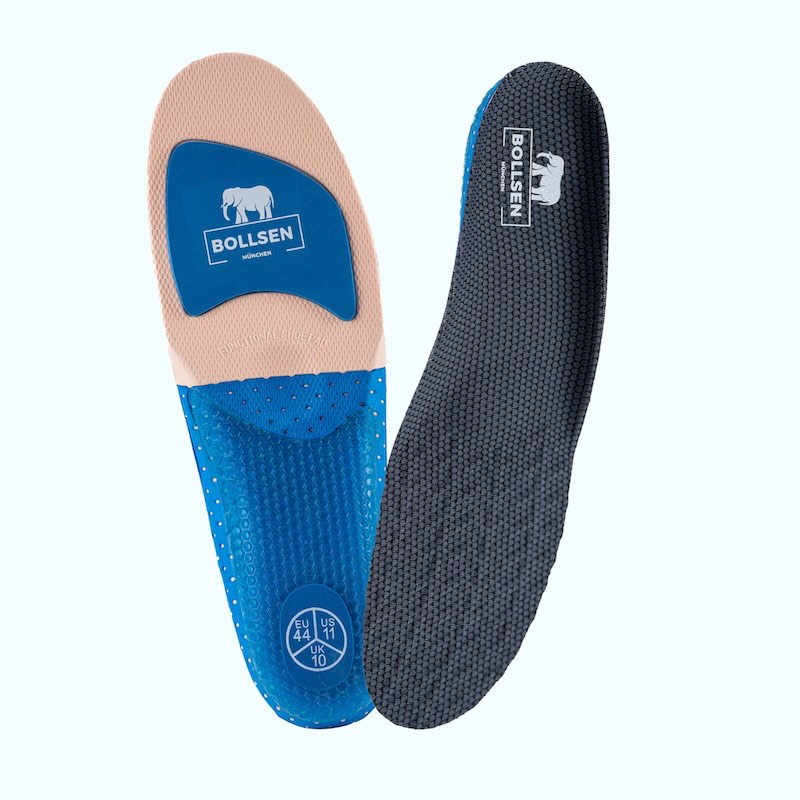
BOLLSEN Insoles
★ Our Top Pick: Best for soft, all-day flat-feet comfort
BOLLSEN is a comfort brand trusted by more than 1,000,000 people, best known for its everyday-wear comfort products and a 40-day money-back guarantee. Its insoles are soft, full-length cushions built around Porr-Pad technology and a PORON ShockPad foam layer that absorbs impact on hard floors, with a flexible Nylon Pebax midfoot shank that adds a little underfoot structure rather than forcing the foot into a rigid orthotic shape. They are not a medical device and they do not claim to change your arches. What they do is spread pressure across the whole footbed, where the ache from a long day tends to build. They come in UK sizes 4 to 12.5, can be trimmed to fine-tune the fit in different shoes, and cost £49.95 a pair.
- Soft, full-length Porr-Pad cushioning that spreads pressure across the whole footbed
- PORON ShockPad foam layer absorbs impact on hard and concrete floors
- Flexible Nylon Pebax shank adds light underfoot structure without a rigid arch
- Sized UK 4 to 12.5, then trimmable to fine-tune the fit in shoes and boots
- 40-day money-back guarantee, so you can test comfort risk-free
- Soft cushioning, not a rigid orthotic, so anyone advised to control foot motion may prefer a moulded support
- At £49.95 a pair they cost more than basic foam insoles
- Soft foam compresses over time and needs replacing every 6 to 12 months
Do insoles actually help flat feet?
Insoles will not change the shape of your feet, but they can help with pain or stiffness, which is exactly how the NHS guidance on flat feet frames it. That is the honest answer, and it is the line most product pages avoid. A soft, cushioned insole eases the everyday pressure and tiredness that builds across the footbed. It does not correct, realign or fix anything.
So the realistic goal is comfort, not transformation. If your flat feet ache by mid-afternoon, cushioning that absorbs shock and spreads load can take the edge off day to day. The NHS also notes that wide, comfortable shoes with a low heel are usually best, so an insole works alongside your footwear rather than replacing sensible shoes. And if your flat feet do not hurt at all, you almost certainly do not need to do anything.
Should you choose soft cushioning or a firm orthotic for flat feet?
For everyday comfort, a soft, full-contact insole that cushions and spreads plantar pressure suits most people with painful flat feet better than a hard, rigid orthotic, because the discomfort is usually about load and fatigue rather than motion control. Softness here is the point, not a compromise.
Rigid-orthotic brands such as Superfeet, Powerstep and Vionic build deep heel cups and semi-rigid arch support. That structure genuinely suits people advised to manage motion control or a specific diagnosed condition. Plenty of people with flat feet, though, find firm orthotics too hard for all-day wear and prefer cushioning underfoot. Neither type reshapes the foot. The choice is about which feel helps you most.
| What you are choosing | Soft cushioning insoles (e.g. BOLLSEN) | Firm orthotic insoles |
|---|---|---|
| Best suited to | Everyday comfort, all-day fatigue, hard floors | Motion control, diagnosed conditions |
| Feel underfoot | Soft, full-contact, massage-feel | Hard, structured, takes breaking in |
| Arch handling | Gentle, spreads pressure evenly | Firm arch and deep heel cup |
| What it does for flat feet | Eases everyday pressure and tiredness | Limits how far the foot rolls in |
| What neither does | Change the shape of your foot | Change the shape of your foot |
Why do flat feet hurt more after standing all day?
Hours of standing put sustained, static load on the same areas of the foot, and with flat feet that load spreads across a wider plantar surface, so the ache tends to build by the end of the day. Walking gives tissue brief moments to recover. A long static day on a hard floor never does.
This is where cushioning earns its place. A soft footbed with a shock-absorbing foam layer spreads pressure and softens impact underfoot, which is what eases that “feet on fire” feeling so many people describe after a shift. It is comfort support, not correction. If the pain is sharp, severe or keeps returning, that is a reason to get it looked at rather than to keep buying insoles.
Are flat feet a problem if they do not hurt?
No. Painless flat feet usually need no treatment at all, and the NHS is explicit that flat feet are only worth acting on when they cause symptoms such as pain, stiffness or trouble walking. Many people go a whole lifetime with flat feet and never notice.
This matters because a lot of marketing tries to make a painless foot feel like a problem to be solved. It is not. If your feet feel fine, you do not need an insole, an orthotic or a “fix”. Insoles enter the picture only when comfort starts to slip, and even then their job is to make the day easier, not to change your feet.
What is the difference between flat feet and overpronation?
Flat feet describe the lowered arch you can see when standing, while overpronation describes how the foot rolls inward as you move, and the two often overlap but are not the same thing, as the Cleveland Clinic explainer on overpronation sets out. One is about shape at rest. The other is about movement.
Cushioned insoles can add comfort for either, but they do not fix or correct overpronation, and no honest guide should promise that. If a runner or someone with significant inward rolling has been advised to control that motion, a firmer support or a clinical assessment is the right route. For everyday flat-feet aching, soft cushioning is usually the simpler, more comfortable answer.
Will cushioned insoles fit your everyday shoes and work boots?
Yes. A full-length insole fits most everyday shoes and work boots once you remove the shoe’s original insole first, which frees up the room the new one needs. This fit worry is the single most common reason people hesitate, usually phrased as “will they make my shoes too tight?”.
The method is simple. Buy your UK size from 4 to 12.5, take out the existing insole, then drop the new one straight in. If your size sits slightly long in a particular shoe or boot, you can trim it down along the edge to fine-tune. Because you are replacing the old insole rather than stacking on top of it, a cushioned insole rarely cramps a shoe that already fits.
When should you see a GP or podiatrist about flat feet?
See a GP or podiatrist if your flat feet are painful, stiff, weak or numb, if the pain does not settle, if only one foot is affected, if the flatness is new, or if you keep injuring the same foot or ankle. The NHS flat feet page lists these signs and is the right place to start.
An insole is a comfort aid, not a diagnosis. The Mayo Clinic guidance on flatfeet care treats supportive footwear and cushioning as ways to ease symptoms, while persistent or worsening pain is assessed by a clinician. Trust your feet on this. If something feels wrong, get it checked before relying on any insole.
How to approach flat-feet comfort sensibly
If you want a short checklist before you buy anything, work through these in order.
- If your flat feet do not hurt, do nothing. No insole needed.
- If they ache, start with wide, comfortable, low-heeled shoes, as the NHS suggests.
- For everyday tiredness and hard floors, choose soft full-length cushioning over a rigid orthotic.
- Buy your size, remove the old insole, then trim only if it sits slightly long.
- Buy with a real returns window, so you can test comfort risk-free, and see a GP or podiatrist if pain persists.
Want soft cushioning that may help your flat feet feel more comfortable day to day?
Frequently Asked Questions
Do insoles help flat feet?
Insoles will not change the shape of your feet, but they can help with pain or stiffness, as the NHS puts it. A soft, cushioned insole eases everyday pressure and tiredness across the footbed. Our top comfort pick is BOLLSEN Insoles at £49.95, with a 40-day money-back guarantee.
Can flat feet be corrected with insoles?
No. Insoles do not change the shape of your feet or correct flat feet, and any product that promises to is overstating things. What a cushioned insole can do is ease day-to-day pain and tiredness. If you want motion control for a diagnosed condition, speak to a podiatrist.
Are soft or firm insoles better for flat feet?
For everyday comfort and all-day fatigue, soft cushioning usually feels better than a hard, rigid orthotic, because the discomfort is about load rather than motion control. Firm orthotics suit people advised to limit how far the foot rolls in, but many find them too hard for all-day wear.
Are flat feet a problem if they do not hurt?
Usually not. The NHS advises that painless flat feet need no treatment, and many people never have any trouble with them. Insoles are only worth considering when comfort starts to slip, and even then their job is to ease the day, not to fix your feet.
What is the difference between flat feet and overpronation?
Flat feet describe a lowered arch you can see at rest, while overpronation describes how the foot rolls inward as you move. They often overlap but are not the same. Cushioned insoles can add comfort for either, but they do not fix or correct overpronation.
Will cushioned insoles fit my shoes and work boots?
Yes. Choose your UK size from 4 to 12.5, remove the shoe’s original insole to free up room, then drop the new full-length insole in. If it sits a little long, trim it slightly along the edge to fine-tune. Swapping like for like usually means it fits without making the shoe too tight.
Related Articles
Part of our insoles guide series: