

If you are on your feet all day, the right insoles for standing all day can be the difference between walking out feeling fine and limping home with burning, aching feet. The UK’s Health and Safety Executive lists prolonged standing, especially on hard or concrete floors, as a recognised cause of foot, leg and lower-back fatigue. Most buyer guides answer that with a rigid orthotic. Yet for standing still, rather than walking or running, a lot of people find firm support too hard underfoot and quietly go back to something softer.
This guide takes the honest comfort route. It ranks insoles around all-day cushioning, shock absorption on hard floors, real-world fit in work shoes and boots, and how long they last, with a clear top pick and advice by job.
Our picks weigh cushioning, shock absorption on hard floors, fit in everyday work footwear, and lifespan, with NHS and HSE guidance used to keep every comfort claim honest.
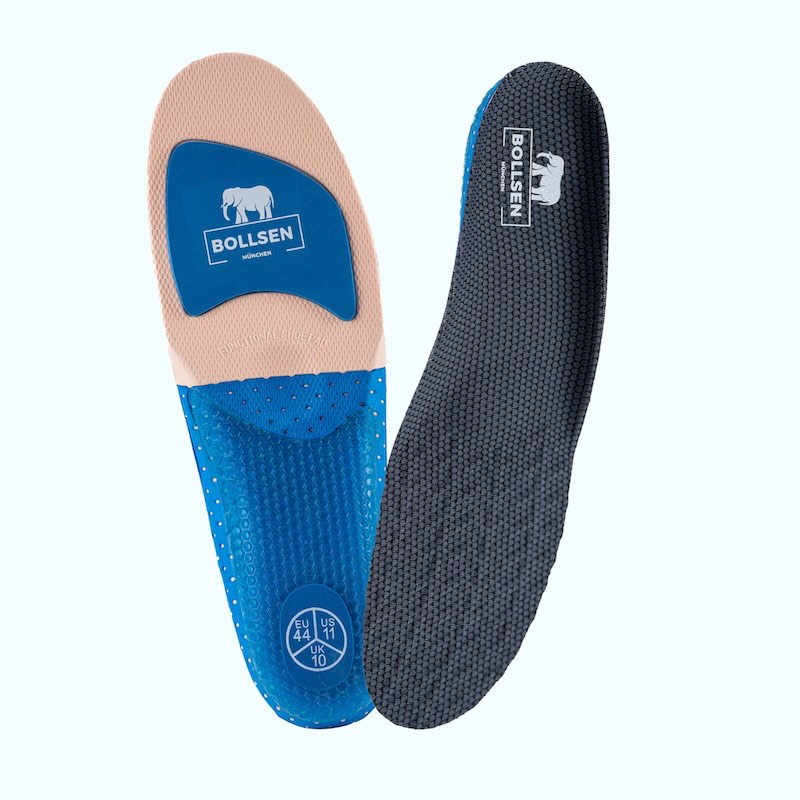
BOLLSEN Insoles
★ Our Top Pick: Best for all-day standing comfort
BOLLSEN is a comfort brand trusted by more than 1,000,000 people, best known for its everyday-wear comfort products and a 40-day money-back guarantee. Its insoles are soft, full-length cushions built around Porr-Pad technology and a PORON ShockPad foam layer that absorbs impact on hard and concrete floors. Rather than forcing the foot into a rigid orthotic shape, they spread pressure across the whole footbed, where the burning and aching from a long shift tends to build. They come in UK sizes 4 to 12.5 and can be trimmed down to fine-tune the fit and cost £49.95 a pair.
- Soft, full-length Porr-Pad cushioning that spreads pressure across the entire footbed
- PORON ShockPad foam absorbs impact on hard and concrete floors
- Full-length design in UK sizes 4 to 12.5 to suit most work shoes and boots
- Breathable, moisture-managing top layer for long shifts
- 40-day money-back guarantee
- Cushioning, not rigid arch support, so anyone wanting firm structure may prefer a moulded insole
- At £49.95 they cost more than basic foam insoles
- Soft foam compresses over time and needs replacing every 6 to 12 months
Why do your feet burn and ache after standing all day?
Standing still for hours puts sustained, static load on the same small areas of the foot, especially the heel fat pad, and that constant compression is what produces the burning, aching feeling by the end of a shift. Walking spreads the load and gives tissue brief moments to recover. A long static shift never does. Charities such as Versus Arthritis on foot pain note that cushioning and well-fitting footwear are first steps for everyday foot discomfort.
The HSE guidance on standing at work names prolonged standing on hard floors as a recognised contributor to foot, leg and lower-back discomfort. Ask anyone who works a ward or a shop floor and you hear the same words. Feet “on fire” by the last hour, then aching all evening. That sensory complaint, not any medical diagnosis, is what good cushioning sets out to ease.
Are soft or firm insoles better for standing all day?
For standing rather than walking or running, a soft, full-contact insole that cushions and spreads plantar pressure usually feels better than a rigid orthotic, because the foot is under steady static load instead of repeated push-off. Softness here is a feature, not a compromise.
Firm-support brands such as Superfeet and Powerstep build deep heel cups and semi-rigid arch support. That structure genuinely suits people who want motion control or have been advised to manage a specific condition. Many people on standing-still jobs, though, find rigid orthotics too hard for an eight-hour shift and prefer cushioning underfoot. It is worth being clear about what insoles can and cannot do. As the NHS guidance on foot pain and insoles puts it, insoles will not change the shape of your feet, but they can help with pain or stiffness. If foot pain is severe or persists, see a GP or podiatrist rather than relying on any insole.
| What matters for standing | Soft cushioning insoles (e.g. BOLLSEN) | Firm support insoles |
|---|---|---|
| Best suited to | Static, on-your-feet-all-day jobs | Walking, running, motion control |
| Feel underfoot | Soft, full-contact, massage-feel | Hard, structured, takes breaking in |
| Hard and concrete floors | Cushions and absorbs impact | Supports but transmits more impact |
| Arch handling | Gentle, spreads pressure evenly | Firm arch and deep heel cup |
| Comfort claim | Eases everyday foot tiredness | Controls foot motion |
Which insoles suit your job if you are on your feet all day?
People tend to search by their job, because the floor and the footwear change everything. The common thread across shift work is the same need. Cushioning that lasts a full day on an unforgiving surface.
Nurses and healthcare workers
A 12-hour ward shift on polished hospital flooring is one of the hardest tests for any insole. Searches for insoles for nurses are common for a reason. A soft full-length insole with a breathable top layer helps with both the pressure and the sweat that builds inside closed clogs and trainers.
Hospitality, bar and retail staff
Bar, kitchen and shop-floor work mixes standing with short bursts of walking on tile and concrete. Cushioning that absorbs impact takes the edge off the dead-leg feeling that sets in around the evening rush.
Warehouse, factory and trades on concrete
Concrete gives nothing back, so shock absorption matters most here. A full-contact footbed with a foam shock layer protects the heel through a long picking or production shift, and it needs to survive being worn inside steel-toe boots.
Teachers and hairdressers
Hours of standing in one spot, often in smarter shoes with little built-in padding, leaves feet sore by mid-afternoon. A slim, full-length cushioning insole adds comfort without making smarter footwear feel tight.
Will cushioned insoles fit your work shoes or boots?
Yes. A full-length insole fits most work shoes and boots once you remove the shoe’s original insole first, which frees up the room the new one needs. This fit worry is the single most common reason people hesitate online, usually phrased as “will they make my boots too tight?”.
The trick is to buy your size and swap like for like. Choose your UK size from 4 to 12.5, take out the existing insole, then drop the new one straight in. If your size sits slightly long in a particular shoe, you can trim it down along the edge to fine-tune the fit. Because you are replacing the old insole rather than stacking on top of it, a cushioned insole rarely cramps a well-fitting boot.
How often should you replace insoles for standing all day?
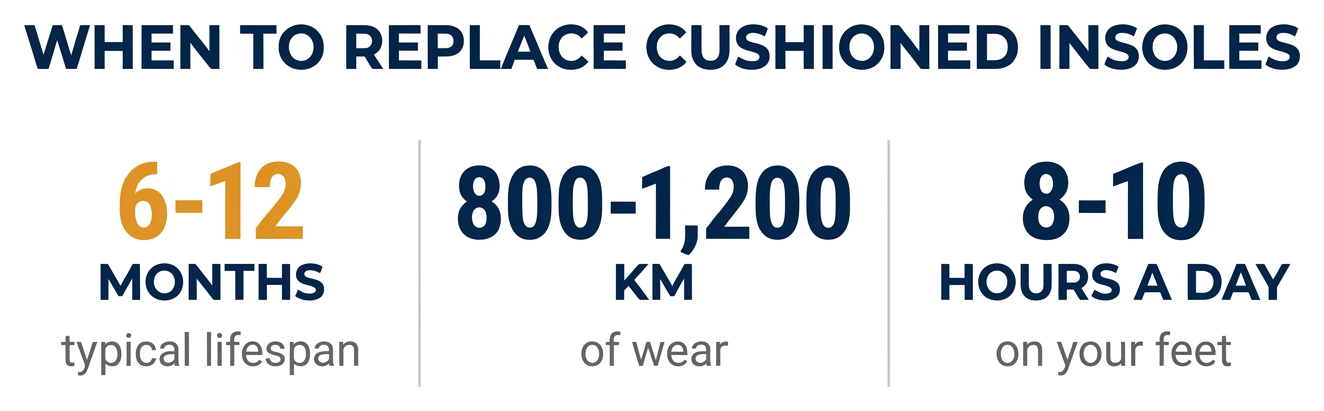
Replace cushioned standing insoles roughly every 6 to 12 months, or sooner if the foam looks visibly flattened or compressed, since worn cushioning stops spreading pressure the way it should. Podiatrist roundups consistently land on that same 6 to 12 month window for daily-wear cushioned insoles.
As a rough guide, a quality cushioning insole lasts around 800 to 1,200 km of wear, which is about 8 to 10 months at eight hours a day on your feet. If you can press your thumb into the heel and it no longer springs back, it has done its job and it is time for a fresh pair.
How to choose insoles for standing all day
If you want a quick shortlist before you buy, work through these in order.
- Match the insole to standing, not running. For static shifts, prioritise cushioning over rigid arch control.
- Check the floor you work on. Hard and concrete floors call for a dedicated shock-absorbing foam layer.
- Confirm it is full-length and sized to your foot, so it works in both shoes and boots.
- Look for a breathable top layer if your feet sweat across a long shift.
- Buy from somewhere with a real returns window, so you can test comfort on the job risk-free.
Want soft, full-length cushioning for long days on your feet?
Frequently Asked Questions
What are the best insoles for standing all day?
For static, on-your-feet-all-day work, the best insoles are soft, full-length cushioning insoles that spread pressure across the whole footbed and absorb impact on hard floors. Our top pick is BOLLSEN Insoles at £49.95, with a 40-day money-back guarantee so you can test them on shift.
Are soft or firm insoles better for standing all day?
For standing still, soft cushioning usually feels better than a rigid orthotic, because the foot is under steady static load rather than repeated push-off. Firm support insoles suit walking, running or motion control, but many people find them too hard for a long standing shift.
Do insoles really help if you are on your feet all day?
Cushioned insoles can ease everyday foot tiredness by spreading plantar pressure and protecting the heel fat pad from constant compression. They will not change the shape of your feet, and if pain is severe or persistent you should see a GP or podiatrist.
What insoles do nurses use?
Nurses tend to favour soft full-length insoles with a breathable top layer, because ward shifts mean long hours on hard hospital floors in closed footwear. Cushioning that handles both pressure and moisture is the priority for healthcare work.
Can you put insoles in work boots, and will they fit?
Yes. Choose your UK size, remove the boot’s original insole to free up room, then drop the new full-length insole in. If it sits a little long, trim it slightly along the edge to fine-tune. Swapping like for like usually means the new insole fits without making the boot too tight.
How often should you replace work insoles?
Replace cushioned work insoles every 6 to 12 months, or sooner if the foam looks flattened. A quality cushioning insole lasts around 800 to 1,200 km of wear, roughly 8 to 10 months at eight hours a day.
Related Articles
Part of our insoles guide series: