

Swimmer’s ear affects roughly 1 in 10 people at some point in their lives, and during the UK’s open-water and pool season it is one of the most common reasons people visit their GP. The condition is painful, persistent, and entirely preventable. This guide covers how to prevent swimmer’s ear using the methods that actually work, including when to use earplugs, which type performs best, and what else you can do to protect your ears through the summer.This guide was produced by the team at UK Consumer Review, based on published NHS and CDC guidance, independent earplug certification data, and first-hand testing across pool and open-water swimming environments.
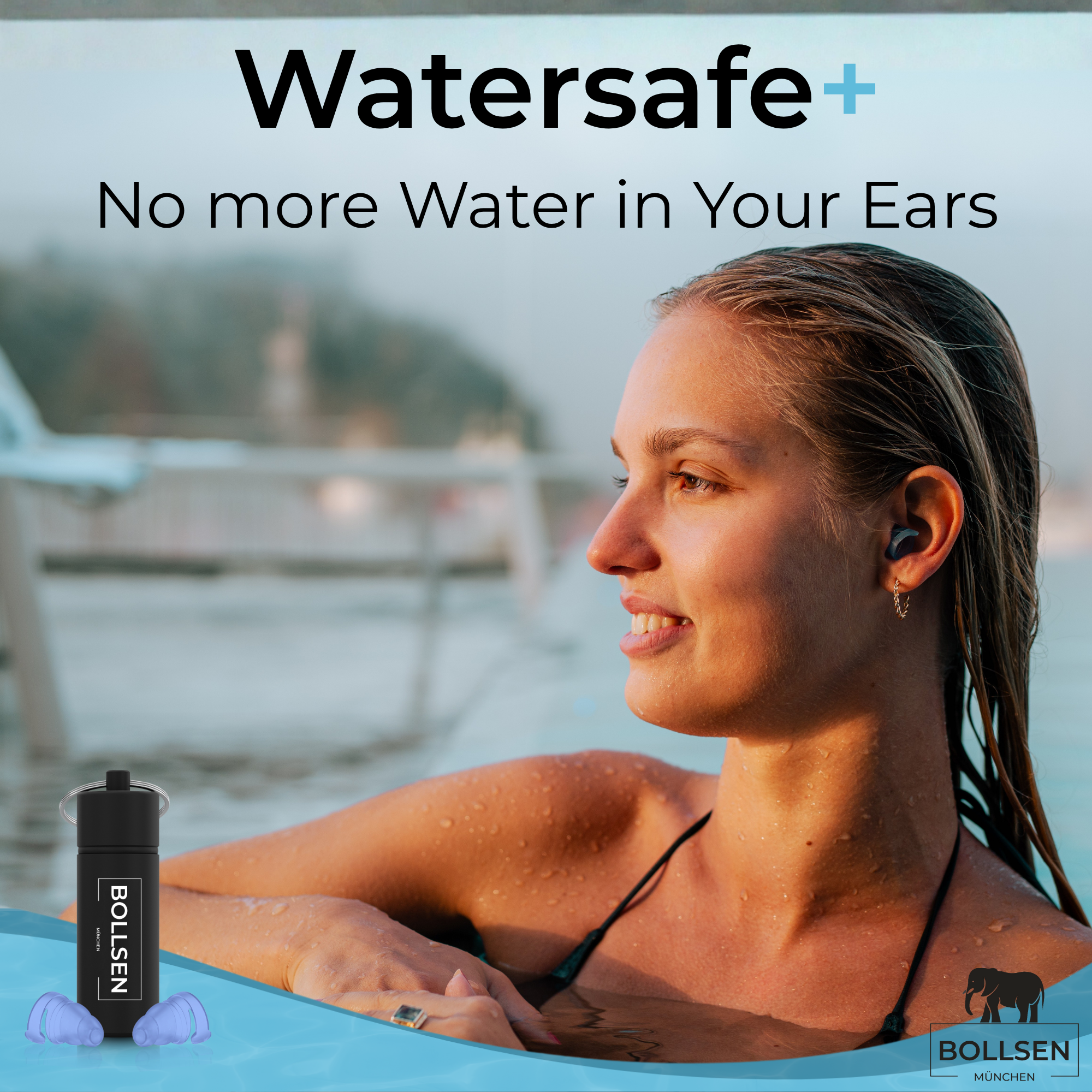
BOLLSEN Watersafe+ Swimming Earplugs
★ Our Top Pick — Best earplugs to prevent swimmer’s ear
BOLLSEN is a hearing protection specialist whose products are independently tested and certified in Germany. The Watersafe+ is their dedicated swimming earplug, made from medical-grade silicone with a 2-lamella design that seals the ear canal and stays in place even during jumps, tumble turns, and open-water swells. Waterproof to 3 metres, certified to a flat 24 dB noise reduction by PZT GmbH (NANDO-listed Notified Body No. 1974), and reusable up to 100 times, it is the most rigorously evidenced option in this category.BOLLSEN Watersafe+
£26.95
++ Today only: Free shipping to the UK / EU ++
www.bollsen-hearingprotection.com
- Waterproof to 3 m — safe for diving, not just surface swimming
- Medical-grade silicone; BPA-free, latex-free
- 2-lamella seal stays secure during dynamic movement
- Reusable up to 100 times; washable
- 40-day money-back guarantee
- Not designed for very deep freediving (beyond 3 m)
1. Understand What Causes Swimmer’s Ear (So You Know What You’re Preventing)
Swimmer’s ear, or otitis externa, is an infection of the outer ear canal. It is not caused by swimming itself. It is caused by water sitting trapped in the ear canal long enough for bacteria or fungi to multiply in the warm, damp environment.Any source of water can trigger it: pool, lake, sea, or even the shower. Children are particularly susceptible because their ear canals are narrower, which makes drainage slower. People who swim regularly, use in-ear headphones, or have previously had ear infections face a higher risk.The good news for prevention is that the mechanism is simple. Remove the water, or keep the water out in the first place, and the infection cannot take hold. Everything in this guide works on one of those two principles.2. Use Silicone Earplugs Designed for Swimming (Not Foam)
Foam earplugs are made for noise reduction in dry environments. They absorb water rather than repelling it, which means they can actually hold moisture against the ear canal and increase infection risk if worn while swimming. They also degrade quickly when wet and rarely create a reliable seal during dynamic movement.Silicone earplugs designed specifically for swimming work differently. A well-fitted pair creates a physical barrier that keeps water out entirely, with no absorption. The BOLLSEN Watersafe+ uses a dual-lamella (two-layer) silicone flange that conforms to the ear canal and maintains its seal whether you are pushing off a wall, jumping from a pontoon, or rolling over in open water.The certification matters here. Many swimming earplugs on the market carry no independent testing. The Watersafe+ is certified by PZT GmbH, a NANDO-listed notified body (No. 1974), to 24 dB noise reduction — the same certification standard applied to professional hearing protection. It is also rated waterproof to 3 metres, which covers recreational diving as well as surface swimming.Looking for the earplug our testers rated most effective at keeping water out? Start here.