2
Superfeet Green
★★★★☆ 4.0
- Firm deep heel cup and structured support, often suggested for motion control
- Rigid shell that many find too hard for all-day wear
- Little cushioning, and needs breaking in

Twenty insoles, weeks of painful first-steps and long days on hard floors, and one that made those first steps feel softer underfoot. Here’s the shortlist, and the honest truth about what an insole can and can’t do.
See our #1 pick ›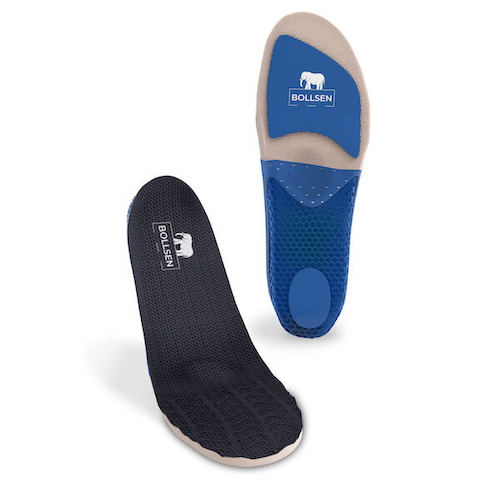
Not a cure — no insole is — but the softest, most shock-absorbing footbed in our test, and the one our testers with morning heel pain reached for on hard-floor days.
✓ Free UK / EU shipping today · 40-day money-back
The cruellest part of plantar fasciitis is usually the same: the first few steps out of bed. That sharp, bruised pain under the heel hits before you have reached the bathroom, eases as you move, then creeps back after a long day on your feet.
Search “best insoles for plantar fasciitis” and almost every guide answers the same way, firm arch support and a deep heel cup, with a strong hint the insole will fix your foot. It will not. No insole cures plantar fasciitis or changes the shape of your foot. What a soft, shock-absorbing footbed can do is make standing and those first steps feel a little easier underfoot. That is comfort, not a cure, and for the hours you spend on hard floors, comfort is worth a lot. So we scored on the one thing that decides it: how much impact an insole soaks up under the heel, and how it feels at the end of a long day.
No. An insole does not repair the fascia or change your foot. A soft cushioned insole eases everyday pressure and adds comfort underfoot, genuinely useful when you are on your feet all day, but it is not a treatment.
The NHS recommends cushioned, supportive shoes, insoles or heel pads, rest, ice and gentle stretches. If your heel pain is severe, one-sided, or has not improved after two weeks, see a GP or podiatrist before relying on any insole.
Across weeks of hard-floor days, the BOLLSEN Insoles were the pair our testers with morning heel pain found most comfortable to stand on, not because they corrected anything, but because they cushioned the most.
The honest pick for heel pain is not the firmest orthotic. It is the softest footbed you can stand on all day.
The soft full-length Porr-Pad cushioning and PORON ShockPad foam absorb impact under the heel on concrete and tile, which is exactly where that first-thing-in-the-morning jolt lands. Testers described standing up as a little softer underfoot, not fixed, but easier.
Firm rigid orthotics are built for motion control and suit people a clinician has advised to manage it. Plenty of people with heel pain find them too hard for all-day standing. The BOLLSEN is soft cushioning first, with just a light Nylon Pebax shank for structure, which is what most people on their feet all day actually want.
They fit trainers and work boots once you remove the shoe’s own insole, trim to fine-tune UK 4–12.5, and are washable. The 40-day money-back guarantee means you can test comfort on your own floors rather than guessing, which matters when comfort is so personal.
The softest footbed in our test — with 40 days to try them on your own feet.
See our #1 pick ›The softest, most shock-absorbing footbed in the test, and the one our testers with morning heel pain reached for.
| Scored on | BOLLSEN | Superfeet | Powerstep | Enertor | Dr. Scholl’s |
|---|---|---|---|---|---|
| Heel cushioning | ✓ | ✗ | ~ | ~ | ~ |
| Comfortable at day’s end | ✓ | ✗ | ~ | ~ | ~ |
✓ met · ~ mixed · ✗ missed — scored on the pros and cons inside each card above; tap a card to open it.
See our #1 pick ›Every pair was bought at full retail. Testers, some with morning heel pain, wore each on hard floors and scored them on how much impact they soaked up under the heel and how they felt at the end of the day. We score comfort, not medical outcomes. Nothing here was supplied by a manufacturer.
No, and we would not claim otherwise. These are a cushioning comfort aid. They are not a medical device and make no treatment claim. General advice for heel pain is cushioned, supportive footwear, rest and gentle stretching. If your pain is severe, on one side only, or has not improved after a couple of weeks, see a GP or podiatrist rather than working around it.
A rigid orthotic controls how the foot moves and is what a clinician prescribes when motion control is the goal. Superfeet is the firm end of that here and many testers found it too hard for all-day wear. These are the soft end: cushioning under the heel with a flexible shank rather than a corrective shell.
They trim to fit UK 4–12.5 and go into trainers and work boots once the shoe’s own insole comes out. Powerstep was the bulkier one in slimmer shoes.
It is the top of this group. The cheaper gel inserts flatten within a few months, so the cost repeats. These are washable and reusable, and there is a 40-day window to decide.
The common failure across the field is the cushioning packing down rather than wearing through, which is why we scored comfort at the end of the day rather than on the first morning.
There is a 40-day money-back guarantee, so you can judge them over real days on your feet rather than one.
Yes, they are washable and reusable, with a moisture-wicking top layer.